How to Choose the Best Small Packaging Boxes for Your Business Needs?
Choosing the right small packaging boxes can significantly impact your business success. According to a recent report by Packaging Digest, 60% of customers choose products based on packaging alone. This statistic highlights the importance of selecting boxes that not only protect your items but also attract customers.
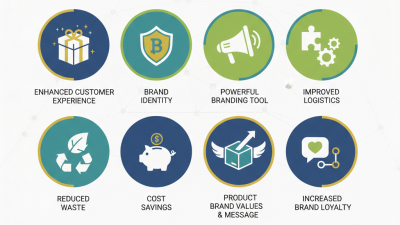
Expert John Smith, a packaging solutions veteran, emphasizes, "The right packaging can elevate your brand image." His insight underscores the need to balance functionality with aesthetics in small packaging boxes. When done right, these boxes can enhance customer experience and improve sales.
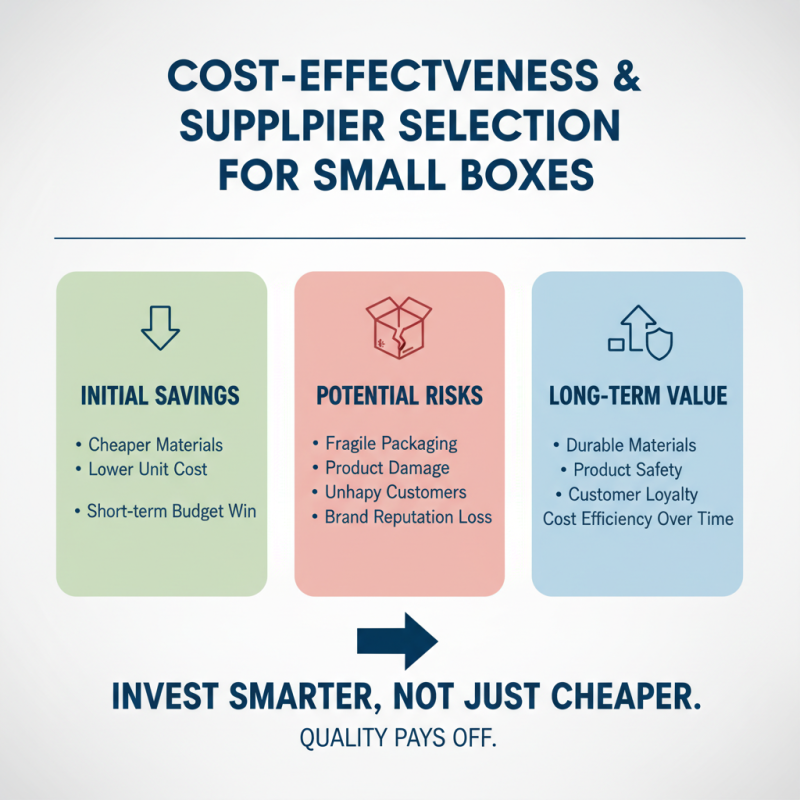
However, many businesses overlook critical factors like material quality, design, and cost. It’s essential to evaluate these aspects carefully. Some companies may prioritize low costs over quality, which can lead to packaging failures. Reflecting on your choices is vital for long-term growth in a competitive market.
Understanding Your Business Needs for Packaging Solutions
Choosing the right small packaging boxes requires a deep understanding of your business needs. Start by analyzing your product specifications. Consider dimensions, weight, and fragility. For example, a report by Smithers Pira highlighted that 40% of packaging wastage occurs due to incorrect box sizes. Using precise measurements minimizes waste and reduces costs.
Think about your branding as well. Packaging is a reflection of your company identity. Professional packaging enhances the unboxing experience, which can increase customer satisfaction. A study by Packaging Strategies found that 70% of consumers cite packaging as an important factor in their purchasing decisions. It's essential to choose materials that convey the right message about your brand.
Tips: Evaluate your customer's expectations. Are they looking for eco-friendly options? Research suggests that 30% of consumers prefer sustainable packaging. Test different box designs to find what resonates best with your target audience. Remember to gather feedback to refine your choices continuously. Small adjustments could lead to significant improvements in customer engagement and brand loyalty.
Types of Small Packaging Boxes: Options and Benefits
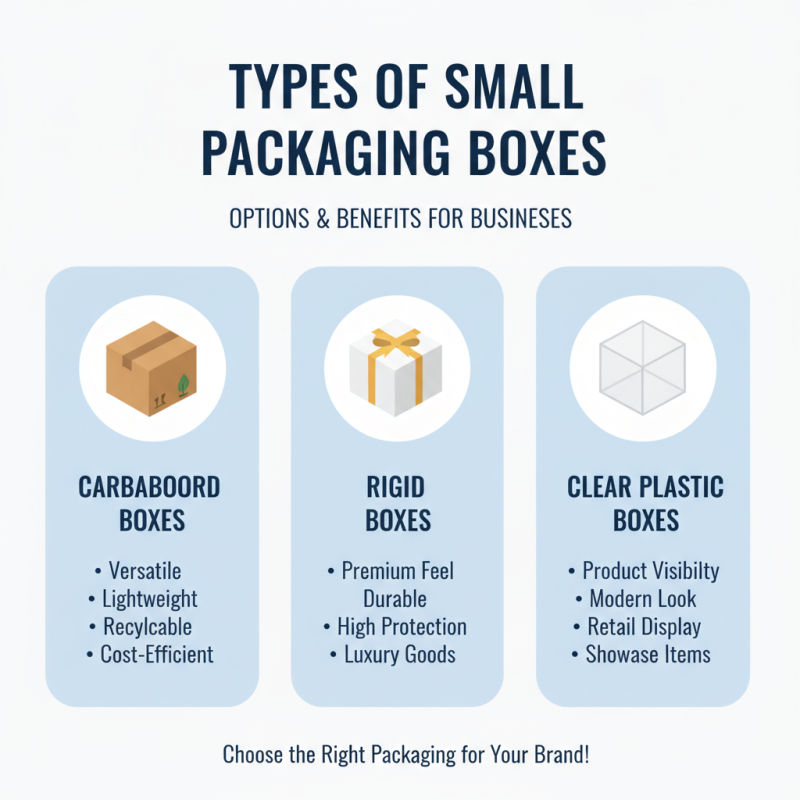
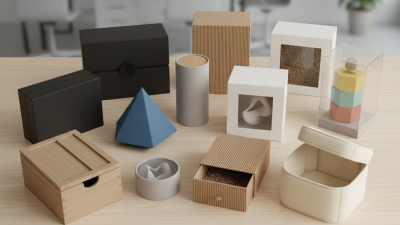
When selecting small packaging boxes for your business, understanding available types is key. There are several options, each with unique benefits. For instance, cardboard boxes serve as a versatile choice. They are lightweight and recyclable. Many businesses choose them for cost-efficiency.
Rigid boxes, on the other hand, offer a premium feel. They are great for products that require extra protection. Consider how your customers will perceive your brand through the packaging. Custom printed options can enhance appeal. They help create a memorable unboxing experience.
While exploring these options, it’s essential to reflect on your specific needs. Think about your product dimensions and weight. Ensure that the boxes you choose will provide safety during shipping. Additionally, consider the environmental impact of your materials. Sustainable options exist, but they may not always suit every budget. Evaluate your priorities carefully for the best fit.
Factors to Consider When Choosing Packaging Materials
Choosing the right packaging materials is crucial for any business. It affects how products are perceived. Start by evaluating the size and weight of your products. Small items may require lightweight materials, while heavier goods need sturdier options. Consider the fragility of your items, as this dictates the cushioning needed within the box.
Sustainability is another essential factor. Eco-friendly packaging options can enhance your brand’s image. However, these materials often come at a higher cost. Balance your budget with your commitment to the environment. Think about your target audience too. They may prefer minimalistic designs or vibrant colors. These preferences can influence the packaging you choose.
Durability plays a vital role. A box that falls apart during shipping reflects poorly on your business. Yet, over-engineering can lead to wasted resources. It’s a delicate balance. Testing different materials can provide insight into what works best. Keep an eye on trends and customer feedback, as these will shape future packaging decisions.
Design and Branding: Customizing Your Packaging
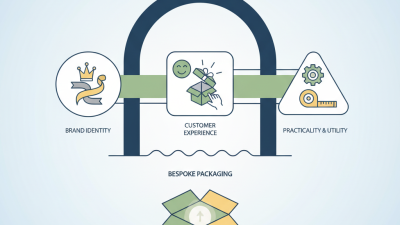
Customizing your packaging is an essential aspect of branding. It goes beyond mere aesthetics. Thoughtful designs catch the eye and communicate brand values. For small packaging boxes, colors, textures, and shapes matter significantly. Each element reflects your brand's identity. Aim for consistency across all packaging to establish a strong presence in the market.
Consider the materials you choose. Eco-friendly options resonate with an increasingly environmentally conscious consumer base. However, sourcing sustainable materials can be challenging. Make sure to balance sustainability with practicality. Your packaging must protect the product while aligning with your brand image. Test different designs to see which resonates best with your audience.
Reflecting on customer feedback is crucial. What pleases customers today may not work tomorrow. Stay adaptable and open to change. Continuously evaluate your packaging’s performance in the market. Seek innovative ways to stand out without compromising quality or brand integrity. The process of customizing packaging can be trial and error, but it’s a necessary investment in your brand's future.
How to Choose the Best Small Packaging Boxes for Your Business Needs? - Design and Branding: Customizing Your Packaging
| Dimension (inches) |
Material |
Closure Type |
Customizable |
Use Case |
| 4 x 4 x 4 |
Kraft Paper |
Tab Lock |
Yes |
Gift Items |
| 6 x 6 x 6 |
Corrugated Cardboard |
Tuck Top |
Yes |
Cosmetics |
| 8 x 4 x 4 |
Recycled Paperboard |
Seal & Stick |
Yes |
Food Products |
| 5 x 5 x 2 |
Foam Board |
Snap Lock |
No |
Jewelry |
| 3 x 3 x 3 |
Plastic |
Hinged Closure |
Yes |
Tech Accessories |