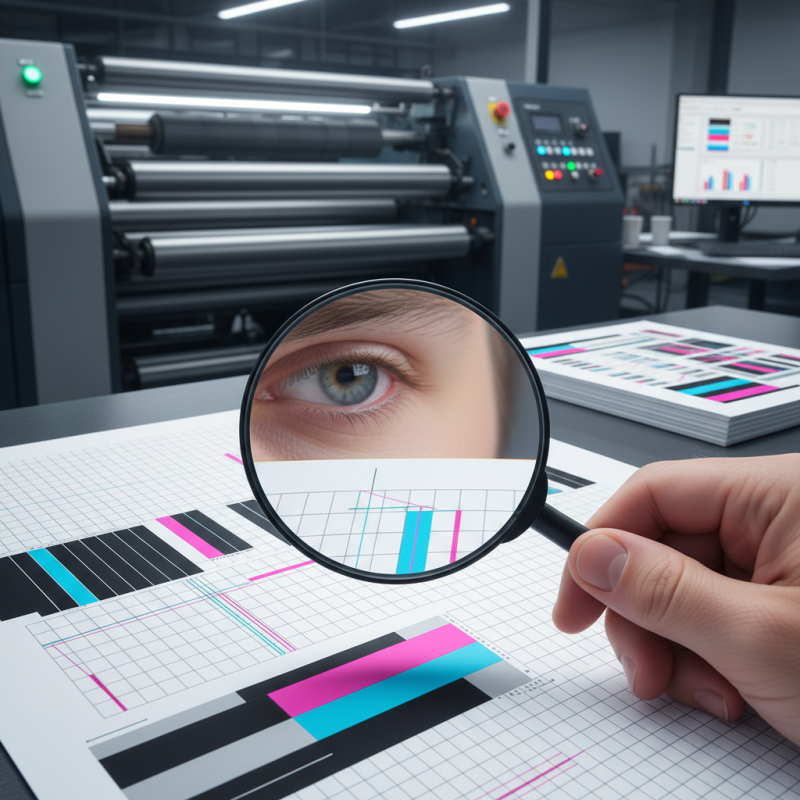
Why is Print Inspection Essential for Quality Control?
In the world of printing, quality can make or break a product. Print Inspection plays a critical role in ensuring that every printed item meets the required standards. Without effective print inspection, mistakes can go unnoticed, leading to customer dissatisfaction.
Print inspection involves closely monitoring the printing process. This includes checking for color accuracy, registration issues, and physical defects. A small error in any of these areas can lead to significant problems. Therefore, implementing a robust print inspection system is essential.
However, not all print inspection processes are perfect. Some inspectors might overlook minor flaws. Others may rely too heavily on automated systems, which can lead to complacency. It is important for teams to reflect on their inspection practices continually. A commitment to quality is crucial to improving outcomes in the printing industry.
Print inspection plays a crucial role in maintaining quality control across various industries. A recent report shows that 72% of companies using print inspection systems noted a significant reduction in defects. However, many still overlook the importance of consistent monitoring. The commitment to quality should not end with the initial production phase; it demands ongoing vigilance.
Attention to detail is vital. Defects such as color misalignment or missing elements can go unnoticed in large batches. According to industry experts, 30% of print errors happen because of inadequate inspection processes. This can lead to costly returns and damaged reputations. Implementing efficient print inspection can catch these errors early, saving time and resources.
Moreover, human oversight can be inconsistent. A study highlighted that relying solely on manual checks increases the risk of mistakes. At least 40% of printed materials contained unnoticed flaws during random inspections. Automation in print inspection can enhance accuracy and ensure that each product meets the highest standards consistently. Thus, it is not just a step in the process; it is a vital commitment to excellence.
Key Benefits of Implementing Print Inspection Processes
Print inspection is a critical process in quality control across various industries, particularly in packaging and manufacturing. Implementing print inspection ensures consistency and accuracy in printed materials. According to recent studies, approximately 65% of manufacturers identify print quality issues as a major challenge. This highlights the importance of robust inspection processes.
Automation can significantly reduce errors. By integrating print inspection technology, companies can detect defects during production. This not only minimizes waste but also enhances brand reputation. A report showed that businesses employing print inspection reduce rework costs by up to 30%, leading to savings on resources and time.
Tips: Regularly audit your print inspection processes. Often, outdated methods linger longer than they should. Invest in training your staff as well. Sometimes, human oversight can lead to missed defects that machines detect easily.
Additionally, integrating user-friendly software can streamline inspections. This includes real-time reporting and analytics. Despite technological advances, there can still be hiccups in implementation. It’s essential to regularly evaluate both equipment and processes to adapt to changing standards. Remember, even the best systems are not foolproof and require regular updates and feedback.
Common Challenges in Print Inspection and How to Overcome Them
Print inspection is vital for maintaining high standards in production. However, there are common challenges many face in ensuring effective print quality. According to a recent industry report, nearly 30% of production defects are related to printing errors. These errors can go unnoticed without rigorous inspection, which not only affects product integrity but also harms brand reputation.
One prevalent challenge is the variability of materials. Different substrates can react uniquely during the printing process, leading to discrepancies. For instance, prints on glossy surfaces may show different ink absorption than prints on matte surfaces. Another issue is the reliance on manual inspection. Human error can occur, especially in high-pressure environments. Studies suggest that over 15% of defects slip past visual checks, which can be costly.
Employing automated inspection solutions can significantly improve accuracy. These systems can analyze prints for consistency, color fidelity, and defects with a speed beyond manual processes. Furthermore, it allows for real-time feedback, which can help in adjusting the printing parameters instantly. Embracing technology is necessary, yet it requires investment and adaptation. The fear of technology replacing human jobs lingers, but the benefits may outweigh these concerns.
Print Inspection Challenges and Solutions
Technological Advances in Print Inspection Methods
In recent years, print inspection technology has seen substantial advancements. Automated systems now perform tasks once done by humans. These improvements reduce error rates and enhance consistency. Industry reports suggest that mechanical failures can account for up to 30% of production losses. Therefore, reliable inspection methods are increasingly crucial.
Innovative techniques, such as machine learning and artificial intelligence, are transforming print inspection. These technologies can detect issues like color variations or misalignments far more accurately than traditional methods. According to a recent study, about 85% of print defects can now be identified in real-time. This swift identification allows for immediate corrections, which minimizes waste and improves overall efficiency.
While many facilities have adopted these advanced methods, challenges remain. Some systems may overlook subtle defects that human inspectors would catch. Additionally, the complexity of implementing new technologies may lead to initial setbacks. Balancing automation with skilled human oversight is vital for optimal results. The journey toward flawless print production requires ongoing assessment and adaptation.
Best Practices for Effective Print Quality Control
Print quality control plays a vital role in maintaining standards. Effective print inspection ensures that products meet expectations. By implementing best practices, companies can greatly enhance their processes.
Regular checks are crucial. Staff should be trained to spot defects. Simple tools like magnifying glasses can help in identifying flaws. It’s essential to examine colors and alignment closely. Minor mistakes can lead to costly reprints. Keeping a checklist for inspections can streamline the process. Visual cues, such as color samples, guide the inspection.
Communication within the team is also important. Discussing issues openly can foster improvement. After inspections, gather feedback to refine processes. Documenting recurring problems allows for better tracking. Learn from past mistakes; sometimes, errors show where training is lacking. Remember, the goal is quality, not perfection. Engaging the team in this journey can create a culture of excellence.